
 Food for Thought contains articles on various nutrition topics written by KAND dietitians.
Cancer Prevention through Diet
By Anna Gewecke, MS RD LDN
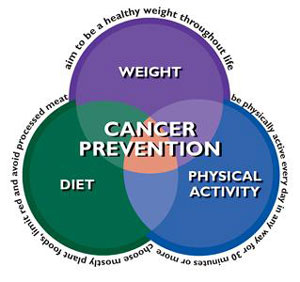
When you have a friend or family member who is battling cancer, it can make you wonder “how can I keep this from happening to me?” There are different types of risk factors for cancer. Some you can affect, and some you are stuck with. Age, sex, and family history are risk factors that you can’t change. However, there are many things you can change, and these will not only lower your risk for cancer, but also for heart disease, diabetes and overweight.
First, eat right! There are many specific recommendations that go into this, but they boil down to eating more plant foods (whole grains, fruits, vegetables, legumes and nuts), and eating less meat , processed, high fat, high salt, and high sugar foods.
Specifically,
Strive to eat 7-9 servings of fruits and vegetables each day. This sounds like a lot, but when you consider how many meals and snacks you eat, along with portion sizes, it will seem much more manageable. A serving of veggies is a half a cup of cooked or raw veggies, or a cup of leafy lettuces- that’s not very big! It’s the same for a serving of fruit- half a cup, or one small piece. If you can have a piece of fruit with breakfast, and for a midmorning snack, then you can eat two servings (one cup) of veggies with lunch and supper and a dessert of fruit, then you’re at 7 servings already!
Whenever you can choose produce with a lot of color- like orange carrots or sweet potatoes, dark green spinach or broccoli, red tomatoes or watermelon, yellow pineapple or peppers, you are making your meal both pretty, and extra healthy. Fruits and veggies are “color coded” to let you know what kind of nutrients that they contain. So the more natural color you get at a meal, the greater the variety of nutrients, and the stronger they are at fighting off cancer.
Foods that you should include regularly include
- Beans
- Berries
- Cruciferous veggies (broccoli, cauliflower, cabbage, Brussels sprouts, kale)
- Dark green leafy vegetables
- Flaxseed
- Garlic
- Grapes and grape juice
- Green tea
- Whole soy foods (tofu, tempeh, soy milk, miso, edamame)
- Tomatoes
- Whole grains
After you have served yourself vegetables for a meal, fill most of the rest of your plate with a whole grain such as whole wheat bread, brown rice, or whole wheat pasta. These foods have many vitamins, minerals, fiber and other nutrients that both strengthen your immune system to fight cancer, and remove cholesterol from your body to fight heart disease. These carbohydrate-rich foods give you the energy that you need to be about your business, and the fiber in whole grains makes them last longer so that you don’t feel exhausted 30 minutes after eating.
When you choose all these plant foods, and fill up on them, you’ll have less room for the foods that can promote cancer. High sugar and calorie dense foods like snack cakes, sugary sodas, French fries, chips and other “junk foods” don’t provide many nutrients, but can contribute to weight gain. Other foods to limit include smoked or cured meats (like bacon, sausage, bologna, ham and many sandwich meats), and salty foods.
Eat lean protein with your meals to keep your body healthy. These include legumes such as pinto beans, white beans and black-eyed peas, nuts, lean fresh meats like beef or pork tenderloin, skinless chicken or turkey, fish, low fat cheeses, eggs, and milk. Choose red meats, beef, pork and lamb less often- limit them to less than 18 ounces a week. You can have a 3 ounce serving of one of these up to six days a week, and stay within this recommendation. If you can have a meatless meal once or twice a week, you’ll be getting more of the healthy plant foods- beans and vegetables- and have an easy way to limit your red meat consumption.
In order to prevent cancer, it is also important to get exercise. The American College of Sports Medicine recommends that we all get at least 30 minutes of moderate exercise every day. These activities include walking, dancing, bicycling, ice and roller skating, horseback riding, canoeing, yoga, volleyball, golfing, softball, baseball, badminton, doubles tennis, downhill skiing, mowing the lawn, general and garden maintenance. That’s quite a list, and most of us like at least one activity on it. What is the best exercise? The one that you’ll do regularly because you enjoy it.
 Both eating well and getting enough exercise will help you do the last thing that helps you to prevent cancer: maintain a healthy body weight. Studies have shown that risk for many cancers including breast and colon cancer is lower in people who are leaner. If you are currently overweight, even losing just 10% of your current weight will help you to have a lower risk for cancer, heart disease and diabetes.
If you would like more information about cancer prevention, and healthy recipes, look at the website for the American Institute for Cancer Research – www.aicr.org.